




March 7, 2026

61 Views

5 min read
Share


Advancements in Truck Safety Technology and Their Impact
Page Contents
Want to talk with us?
Safety in trucking is of the utmost importance for companies. To reduce potential accident risks, companies should use technologies that protect the driver and cargo. There are widely used, sophisticated driver assistance systems that prevent lots of human errors and reduce safety risks.
Current Truck Safety Technologies
Innovations move the trucking industry ahead by equipping a vehicle with sensors, cameras, and data processing facilities. Trucks become smarter thanks to the safety technologies, including:
- Collision avoidance systems. To prevent crashes, this system inspects the route for potential dangers. When a truck reaches an obstacle, it lets a driver know about the risk with forward collision warnings, which are audible, visual, or haptic signs. Then, the system will automatically brake if a driver does not respond to the alert.
- Lane-keeping assistance. The system uses cameras to monitor the lane marking to ensure that a driver with fatigue keeps the lane. It warns about lane departure with signs on the dashboard or sounds.
- Electronic stability control. ESC is needed for safe, sudden maneuvers on a road. This active safety system includes speed sensors and independent brakes for each truck wheel. It activates automatic slowing down when a critical loss of control is observed.
- Advanced sensors and telematics are integrated in trucks for early and proactive diagnostics. According to data, a manager can easily track risky driver behavior and vehicle performance in real time and inform about the needs beforehand to plan condition-based maintenance. It is not only about the protection of a driver and crash avoidance. It allows for reducing the downtime needed for more complex repairs.
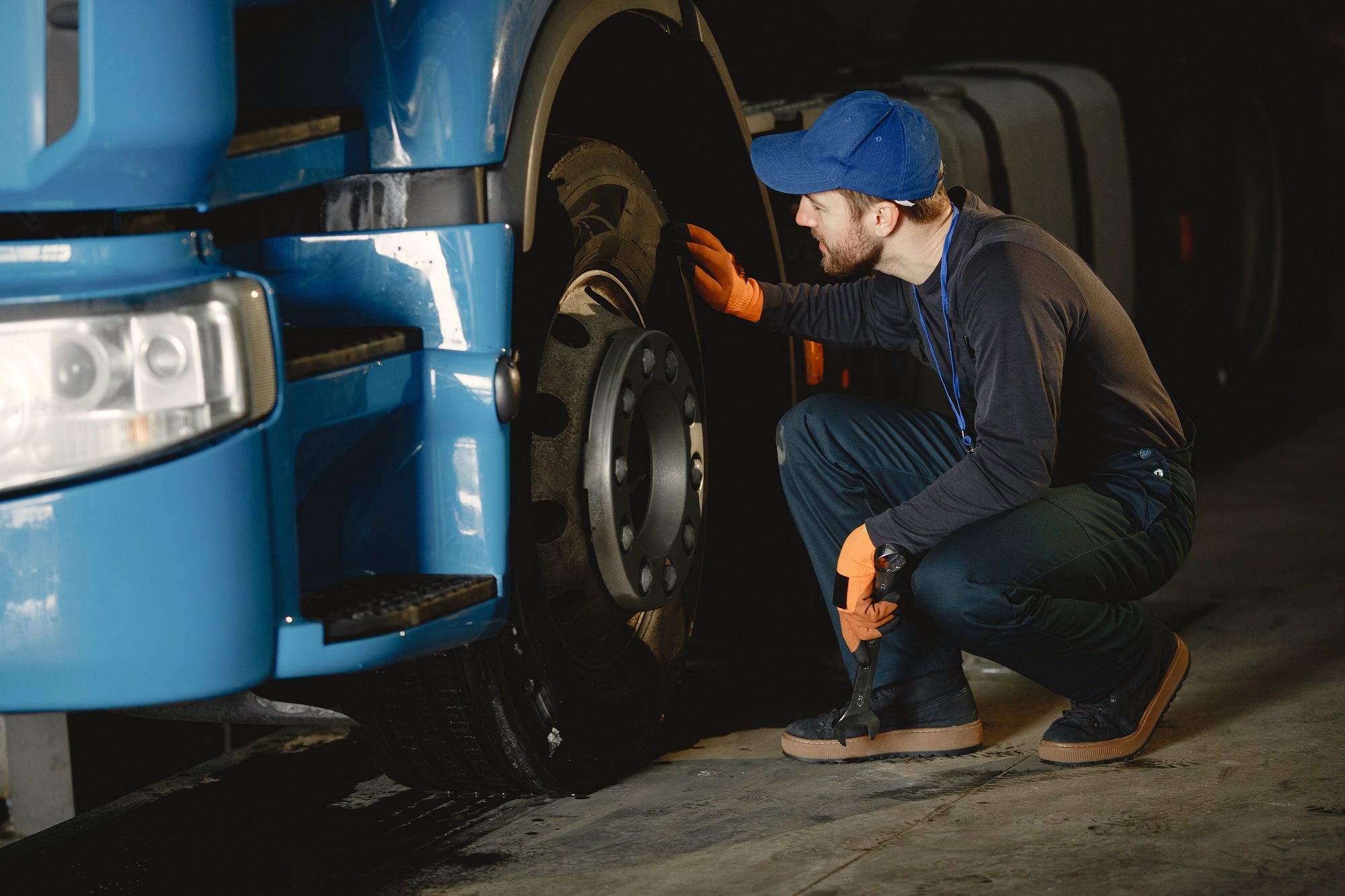
The systems are usually compatible with mobile devices through mobile apps, which assist in on-the-go inspections. A driver can easily communicate with a dispatcher or other party related to transportation by using such an app. The technologies play a paramount role in reducing accidents and operational risks.
Driver-Focused Safety Innovations
Thus, truck technologies can monitor the driver’s behavior, detect errors or his fatigue, and alert to prevent a crash. To avoid dangerous driving, which is a frequent reason for traffic accidents, AI-based driver monitoring systems are being developed. With cameras incorporated in a cab, they capture the driver’s gaze, monitor movements of his head, etc., to define distraction or other improper driving behavior and alert drivers about a potential danger. Through early warnings, the ADAS systems enhance driver performance, minimize human errors, and reduce the frequency and severity of crashes. Trucking companies should integrate the systems and train their staff to operate them. Adaptation can take some time.
Industry-Wide Impact
Trucking technologies refine fleet management and increase the efficiency of a trucking company. Predictive maintenance, monitoring of drivers’ behavior, and automatic route optimization based on real-time data dramatically improve safety on roads. These technologies impact insurance and, as a result, cost savings. Accidents cause negative track records and worse insurance terms. Insurance premiums depend on the company’s safety record. If, due to the technology, truck safety increases, a trucking company will pay less for coverage against risks. Costs are also saved due to less expensive predictive maintenance. Besides, regulatory compliance is simplified as automating data collection is enabled through the ADAS and other systems.
The technology in trucks becomes increasingly advanced, defining future trends. Trucking safety systems are heading for:
- AI-based products with the use of multiple sensors for early detection of safety risks;
- vehicle-to-everything communication that will be perfected to enable accurate, rapid hazard warnings in real time;
- self-driving trucks that are under intense discussion within the industry;
- The “Internet of Things” offers options to share vital information, monitor freight status, ensure driver performance, define a route in real time, etc.
The driver’s well-being is always a concern when it comes to safety. Trucking companies implement health programs for truckers, offering truck driver training, better scheduling, etc.
Shedule a call

YOUR TRUSTED PARTNER
FOR COMPREHENSIVE FLEET
MANAGEMENT SOLUTIONS
FOR COMPREHENSIVE FLEET
MANAGEMENT SOLUTIONS
Get started
Challenges and Considerations
The trucking industry engages safety technologies in operation, which make the business more efficient and cost-effective. But this transformation requires staying aware of the challenges it comes with, including:
- Extra expenses. The integration cost depends on safety technology. Commonly, it is significant. Some systems are mandated to be used on a truck to comply with the regulations, including record-keeping tools. Others can be preferred by a company and still raise spending.
- Potential technical limitations. Sensors can fail in adverse weather. Systems may fail to use the collected data or define obstacles under certain conditions, like high speeds. Also, some systems do not match some old trucks.
- Balancing automation and human oversight. Automation enables accurate monitoring, detecting the danger that may be overlooked by a driver, and immediate response. But privacy concerns can arise as to driver monitoring.
Also, training is required to benefit from the technologies. Drivers, dispatchers, and other employees involved should know how to use complex tools. The infrastructure should be adapted to the new safety system.

Conclusion
Trucking companies eagerly engage safety technologies tailored to enhance operational efficiency with cameras, sensors, automatic emergency braking, lane departure warning systems, or collision avoidance systems. The approach reduces crashes but causes quite high costs for implementation, staff training, maintenance, and development of smart infrastructure. Anyway, investments will pay off in the near future.
Sign up for Exclusive Trucking Tips
Related Article
Test