



November 1, 2022

6446 Views

8 min read
Share


Dot Regulations Complete Guide About Tire Tread Depth
Page Contents
Want to talk with us?
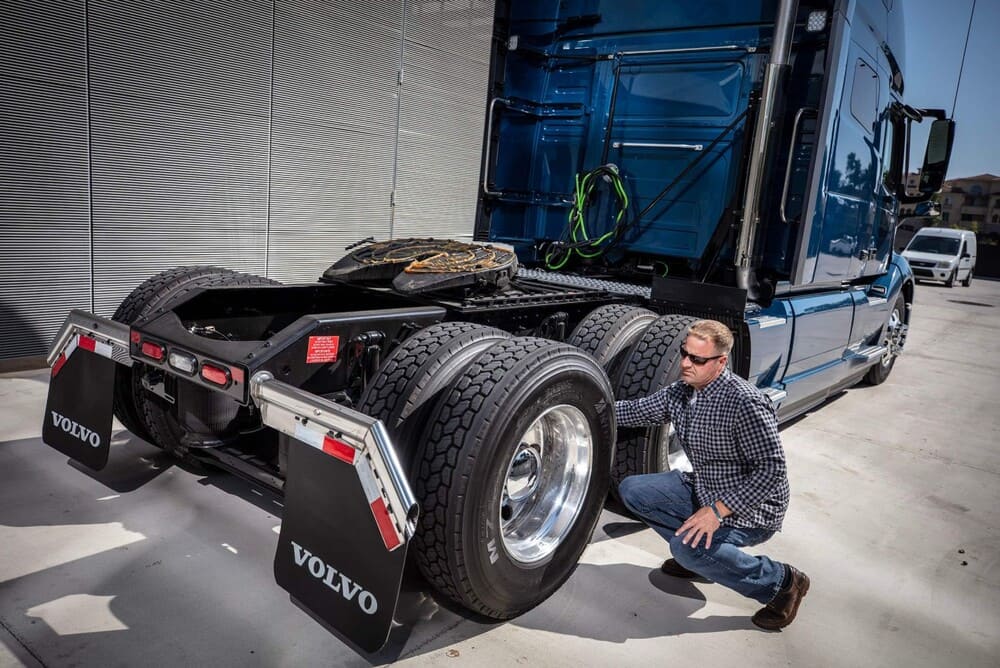 Just like the brakes on your car, the tires on your truck are one of the most important safety features. The proper tread depth and good condition of your tires are crucial for this reason. In this article, we’ll discuss the definition of tire tread depth and how to ensure your tires comply with the DOT tire regulations.
What Is Tire Tread Depth?
Tire tread depth refers to the distance between the top of the tire tread and the bottom of its deepest groove. Deeper grooves lead to greater tread depth in your tire. The tread depth of most passenger car tires is around 10/32 inches. Thus, the tread depth of the tire is the same. The tread depth of truck tires usually ranges from 14/32 inches because trucks are heavier than passenger cars and need more tread depth to grip the road. Tread depth for truck tires must reach at least 2/32 inches. Driving on tires with less than 2/32 inches of tread is risky and can cause accidents. Thus, even if in Southern California, minimum tread depth is not required, it is better to adhere to this recommendation.
Why Is It Important To Check The Tire Tread Depth On Trucks?
The tires are the sole part of the truck that has contact with the road, and the impact they have on how the truck operates is significant. The truck may slide and skid on wet or icy roads if the tread on your tires is too shallow, leading to accidents. Checking the tread depth on your tires is also important — as the tread wears down, the tire’s ability to grip the road decreases. The truck may slide or hydroplane on wet roads due to this. Even fuel economy is affected by tire tread depth. The tire’s grip on the road decreases as its tread becomes shallower, and the truck is forced to work harder to drive, resulting in more fuel consumption.
What are the Tread Depth Regulations for Commercial Trucks?
All commercial trucks need tires that have a minimum tread depth of 2/32′′ as required by the Department of Transportation (DOT). This tread depth is considered safe for use on public roads. Commercial trucks are not allowed to use tires with less than 2/32′′ of tread depth. Illegal tires mean fines for the driver and the truck being taken out of service. However, many states have their own regulations regarding commercial truck tire tread depth, and they can even surpass those of the DOT tire regulations in terms of stringency. For instance, in some states, a minimum tread depth of 4/32′′ is required. To determine any specific regulations, it’s recommended to consult with your state’s Department of Transportation and ensure that your truck’s tires have sufficient tread depth. To accomplish this, regularly check the tread depth and replace the tires once they reach 4/32 inches. This will guarantee the safety of your truck on the roads and prevent any DOT fines.
Shedule a call
YOUR TRUSTED PARTNER FOR COMPREHENSIVE FLEET MANAGEMENT SOLUTIONS
Get started
Rules, Regulations, and Other Aspects of Tire Tread Depth in Specific States
There are DOT rules for tires used on commercial vehicles developed to ensure that tires adhere to safety standards, which are enforced by the Federal Motor Carrier Safety Administration (FMCSA). For instance, DOT tire regulations in Michigan have a specific rule related to tire chains that they must not contact the bare pavement. While title 49 of the Code of Federal Regulations established by DOT (393.75(b) and 393.75(c)) obliges drivers of commercial trucks (trailers) to have each steer tire with a tread depth of at least 4/32 inch. Any other commercial truck tire tread depth must be at least 2/32 inch. These are the minimum legal tread depths in most states of the U.S.
Individual states have the right to establish stricter requirements, including passenger vehicle regulations, like a minimum tire tread depth equal to:
- 1/32 Inch in California and Idaho;
- 3/32 Inch in Texas.
The tire tread depth is not governed by local laws. These are recommendations that are still considered during the state-mandated safety inspections. There are no tread restrictions in Montana, Arkansas, New Mexico, North Dakota, and West Virginia. Also, in Southern California minimum tread depth is not limited.
Tire Tread Depth Standards for Different Types of Cars
Tire tread depth regulations affect two types of cars:
- Commercial trucks and trailers. Provided by NHTSA, they are mandatory everywhere except for states with individual rules. The minimum truck, trailer, or semi truck tire tread depth should be 4/32 inches for steer tires and 2/32 inches for all other tires (drive ones).
- Passenger cars. Established by state laws, they are mandatory only in the state. The minimum tread depth is 2/32 inches. While driving in winter, the recommended minimum tire tread depth is 4/32 inches.
The DOT regulations generally prevail over state rules for interstate commerce. State laws should be the same or more restrictive than federal ones. This requirement is considered in dispatch services to stay compliant and avoid license suspension.
Consequences of Non-Compliance
Non-compliance causes inefficient handling and braking, which increases road safety risk, fuel, and maintenance expenses. Also, as the tire tread depth is regulated by the DOT through the FMCSA and the NHTSA, during audits, they inspect the tires to ensure compliance and issue “out-of-service” orders or costly fines if a violation has been found. In addition, a negative mark appears in a company’s safety record. To ensure the truck is compliant, the check of tire tread depth is recommended during a logbook service.
How To Measure Commercial Truck Tire Tread Depth
Using a tread depth gauge is the most common approach. This inexpensive yet easy-to-use tool can be bought at most auto parts stores. Inserting the gauge into the tire tread is all you need to use a tread depth gauge, and it then will reveal the depth of the tread. 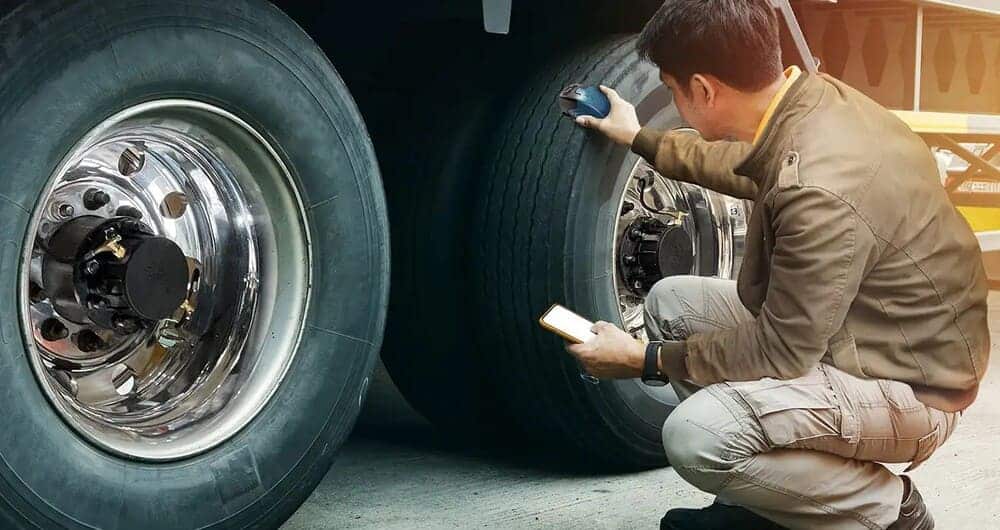
Step-by-Step Guide
Insert the tread depth gauge into the tire’s groove and push it until it stops to use it. The tread depth will be measured by the number located at the top of the tire. If the tread depth gauge lines up with the 10 mark, it indicates that the tread depth is 10/32′′. Several different areas on each tire must be checked for tread depth. By doing this, you will determine the overall tread depth accurately. Using a penny is another way to measure tire tread depth. Simply insert a penny into the tire tread with Lincoln’s head facing down. The tread depth is less than 2/32′′ if you can see the whole of Lincoln’s head, ranges between 2/8 inch and 4/8 inch when you see just its part, and is 4/32 inches or greater if Lincoln’s head is obscure. Nevertheless, the tire tread depth gauge is the most precise method for determining tread depth.
Where Can You Buy A Tire Tread Depth Gauge?
Tire tread depth gauges can be bought at any car parts store or online. Remember that getting accurate readings requires purchasing a high-quality tool.
How Often Should You Check Your Truck’s Tires?
Regularly checking your tires is important to make sure they comply with DOT regulations. Inspect your tires in case your truck starts slipping or skidding, or if the ride is more difficult than usual.
What To Do If Your Truck Tire Treads Are Uneven
It’s important to take action immediately if you detect uneven treads on your truck tires, as they can lead to poor handling and even a blowout for your truck. Fixing uneven truck tire treads can be done in two ways: rotating tires or adjusting a tire’s pressure. If none of these solutions work, you may have to buy new tires. If you’re uncertain about how to fix your uneven tire treads on your own, it’s a good idea to take your truck to a mechanic. They’ll resolve the problem and even offer you guidance on how to prevent it from happening again.
How To Keep Your Fleet In Check With FleetCare’s Safety Platform
FleetCare is the top truck safety platform that assists fleets in ensuring their safety compliance. Our software allows for easy tracking of your vehicles, drivers, and maintenance records. Tire tread depth monitoring is among the many features we offer to help you stay compliant with DOT regulations in 2024 and beyond. Our tire tread depth feature will allow you to set up alerts to stay informed about the condition of your tires. To learn more about our services or to sign up for a free trial, contact us today.
Sign up for Exclusive Trucking Tips
Related Article

January 26, 2026
395 Views
6 min read
January 26, 2026
1871 Views
6 min read
Test