


October 10, 2023

5274 Views

7 min read
April 28, 2026
391 Views
6 min read
Share


During the year, carriers should be ready to pass six levels of a roadside DOT inspection for trucks. The checks are conducted by certified officials on demand during the year. They are meant to ensure proper working conditions and the safety of vehicles. Drivers are evaluated, too. The rules are defined by the Federal Motor Carrier Safety Administration and applied to trucks (CMVs) weighing over 10,001 pounds. The procedure is usually unscheduled and can cause quite severe penalties if violations are detected. We are going to explore the subject in the article to help carriers to get prepared and avoid fines, out-of-service orders, or license suspension.
Six-level inspections are applied without strict order. Any type of check can be performed at any moment, even on the road, when the state enforcer stops a truck. But each one has an internal layout, a procedural structure, which involves physical examination of certain vehicle systems, inspection of documents and cargo, or evaluation of a driver’s state. There are multi-faceted inspections, which are more expanded and comprehensive, like Levels 1, 2, 3, and 5. They cover various aspects. The Levels 4 and 6 are related mostly to a single issue, being more specific.
Because of a diversity of audit objectives, there can be lots of violations, with more frequent ones among others, like an invalid driver’s license, exceeding HOS, faulty lights, etc. It is crucial to understand the procedure, as well as the purposes of every level and common violations, to pass these inspections smoothly.

This one is a full driver, cargo, and vehicle check. It is known as the “North American Standard Inspection.” The commonly performed level consists of 37 steps and takes about an hour. The inspector checks the required documents (commercial driver’s license, medical examiner’s certificate, logbook, etc.). The substance use assessment is also conducted. The truck with cargo is thoroughly examined. The following vehicle systems are checked:
Tire assembly, seat belts, and coupling devices, like fifth wheels and kingpins, are evaluated. Inspectors do not forget about windshield wipers.
To be ready for Level 1, drivers should be sure they have all the required documents valid and properly arranged. They should be easily accessible at any moment. There must be necessary permits and vehicle registration for both a trailer and a tractor. The HOS records must be accurate. Cargo should be accompanied by shipping papers. The annual vehicle inspection report can also be required. To avoid vehicle-related violations, a driver should conduct a pre-trip inspection, ensuring that the safety systems operate properly and the truck is clean.
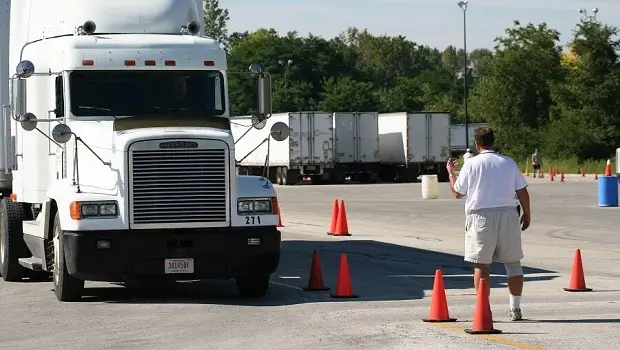
The Level 2 DOT inspection is similar to the Level 1, but it is limited to a walk-around check. It is more superficial. Though it includes both paperwork and mechanical no-under-vehicle examination. A driver should be ready to show visible parts of the truck and the driver’s documentation. The intoxication evaluation is performed. These inspections can be more than a roadside checkpoint. They are conducted at weigh stations, too. Regardless of location, they typically take about half an hour.

The level 3 inspection is also known as a “Driver/Credential/Administrative Inspection.” Here, only the driver and documents are checked. The officer will look through:
Motor carriers must have a unique USDOT number that allows inspectors to monitor compliance and check the status through the FMCSA system to get information about previous inspections, safety audits, and crash investigations. To prepare for this level, drivers should have all the papers and data valid, accurate, and immediately available. Also, the electronic logging device should run properly to show an updated log. It is better to understand ELD procedures to display the required information quickly. Commonly, the level 3 inspection is completed in 15 minutes roughly, but it does not rule out the possibility that higher checks will be conducted next.
The Level 4 DOT inspection is intended to examine any single part or function of a truck. Typically, it follows the claim or violation in order to track a process and prove that the issue has been fixed. Durations can be different depending on the scope of work.
It is known as a “Vehicle-Only Inspection” and mirrors the Level 1, but the driver is not involved in the process. For about 45 minutes, inspectors examine the truck in the absence of the driver at any location to ensure perfect maintenance.
It is known as the “Enhanced NAS Inspection for Radioactive Shipments,” intended for hazardous, radioactive cargo. It can include the elements of the Level 1 inspection, but the key purpose is to check radioactive materials transported by the truck. The examination continues for about an hour. The successful inspection results in attaching a nuclear symbol to the checked truck, which a trucking company can use for one trip only.

The DOT level inspections are routine procedures that can be initiated at any time on the road, at weigh stations, or in other places. They differ from each other in targets and/or in varying degrees of examination depth. Inspectors assess trucks, cargo, papers, and driver credentials to ensure safety. There are also checks of a single part or radioactive material. The level inspections should not be confused with the annual DOT audit, a report of which can be required during one of these checks.
To pass level inspections successfully, carriers and drivers should comply with the DOT requirements. A driver should have valid mandatory papers kept in a holder at hand to show immediately when required. The package includes a driver’s license, driver qualification file, vehicle registration, maintenance records, insurance coverage, and more. Predictive maintenance is highly recommended, which is not only for the audit but also for long-lasting truck usage and safety on the road. Those papers that can be digitized, like hours of service (HOS) reports, should be available on a mobile device.
October 10, 2023
5274 Views
7 min read

Test